Category B Driving Licence Explained

Category B Driving Licence Explained (2026 Rules)

Category B Driving Licence Explained

Category B Driving Licence Explained

Most UK drivers hold a Category B driving licence without ever having fully worked out what it actually covers beyond “a car.” That gap matters more than it used to heavier electric vans, popular motorhome conversions, and a genuinely confusing towing rule change in 2021 have all blurred lines that used to be simple. This guide sets out exactly what Category B allows, where the hard limits sit, and where people most commonly get caught out.


What Is a Category B Driving Licence?

Category B is the standard entitlement granted when you pass a normal car driving test in the UK. It’s the category almost every driver holds, and it’s what most people mean when they simply say “a full licence.”

When you receive it

  • You’re issued Category B entitlement automatically the moment you pass your practical car driving test.
  • It appears on the back of your photocard licence, listed alongside the date you passed.
  • If you passed in an automatic, your licence will show a restriction you’ll be limited to automatic vehicles unless you later pass a manual test.

Where to find it on your licence

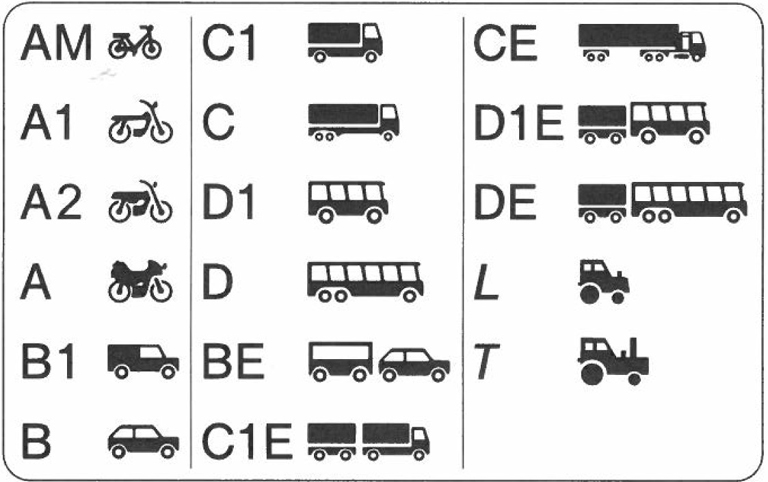
The back of a UK photocard licence lists categories in a grid — Category B sits alongside any others you hold, each with an issue date. If you’re not sure exactly what your current entitlements are, the most reliable method is the “View your driving licence” service on GOV.UK, since a physical card can lag behind recent additions.

Can You Buy a UK Driving Licence Online? Driving Licence Without a Test? How to Spot Fake DVLA Driving Licence Websites Can You Buy an HGV Licence? DVLA insider licence, Government driving licence for sale, Official driving licence for sale, Registered licence online, Real driving licence for sale, Original driving licence for sale,

Why understanding your licence category matters

Driving a vehicle outside your entitlement isn’t a grey area it invalidates your insurance and can result in prosecution, regardless of how competently you actually drive the vehicle in question.


The Hard Limits: Weight and Passenger Restrictions

Category B entitlement is defined by two hard numbers: a weight ceiling and a seating ceiling.

Understanding Maximum Authorised Mass (MAM)

MAM is the maximum permitted weight of a vehicle including its full load passengers, fuel, and cargo not just the vehicle’s weight when empty. This is the figure that actually determines which licence category you need, and it’s the single most common source of confusion for van and motorhome drivers.

  • A vehicle’s unladen weight might sit comfortably under 3,500kg, but once you load it up, its MAM — the figure on the manufacturer’s plate is what counts, not what it happens to weigh on a given day.

The 3,500kg limit

  • [ ] Category B covers vehicles up to 3,500kg MAM
  • [ ] This applies whether the vehicle is a car, an SUV, a light van, or a motorhome
  • [ ] Exceeding this threshold on a standard MAM basis requires Category C1 instead

Passenger seat limits

  • [ ] Category B covers vehicles with up to 8 passenger seats (plus the driver)
  • [ ] Anything with more than 8 passenger seats — a larger minibus, for example — requires Category D1 or Category D, depending on size
  • [ ] This is a genuinely common trap for community groups and small charities running minibus transport without realising their volunteer drivers need additional entitlement

The electric vehicle weight exception

This is where things get more complicated than most drivers expect. Battery packs add substantial weight, and an electric van built on the same chassis as a diesel equivalent can tip meaningfully closer to or over the 3,500kg line. Category D1 or Category D

  • A long-standing government derogation allows Category B licence holders to drive alternatively fuelled goods vehicles (predominantly electric vans) up to 4,250kg MAM, rather than the standard 3,500kg.
  • This exists specifically because battery weight was pushing otherwise Category-B-equivalent electric vans over the line into HGV territory, which would have penalised cleaner vehicles compared to their diesel counterparts.
  • Under the current rules, drivers typically need to complete 5 hours of additional training before using this extended allowance though government consultations in recent years have proposed removing this training requirement, so it’s worth checking the latest GOV.UK guidance rather than assuming it still applies by the time you read this.
  • The derogation currently covers goods vehicles specifically it doesn’t extend Category B’s general 3,500kg limit to electric cars, SUVs, or passenger vehicles.

Can You Drive a Transit Van on a Category B Licence?

Yes, in most cases but “most cases” is doing some work in that sentence.

Standard commercial vans

  • A typical Ford Transit Custom, Transit Connect, or similar mid-sized van sits comfortably under 3,500kg MAM and is fully covered by Category B.
  • Business use doesn’t change the licence requirement — a van driven for work still only needs Category B, provided it stays within the weight limit.

Larger Transit variants and box vans

  • The larger Transit (not Custom) models, particularly long-wheelbase or high-roof variants loaded close to capacity, can push close to or over 3,500kg MAM depending on specification.
  • Always check the manufacturer’s plate, not just the model name “Transit” alone doesn’t tell you which side of the line a specific vehicle sits on.

Rental vans

  • Rental companies generally specify the licence category required for each van on their booking page — this is worth checking before booking, since some larger “Luton” box vans with a tail lift exceed 3,500kg MAM and require Category C1.

When you need Category C1 instead

  • [ ] Vehicle MAM exceeds 3,500kg (or 4,250kg for a qualifying electric goods vehicle)
  • [ ] You’re regularly loading a van close to or at its maximum payload
  • [ ] The vehicle is a genuine “Luton box van” style large van, common in furniture removals

Towing Rules: What Trailers Can You Legally Pull?

This is the area that changed most significantly in recent years, and plenty of drivers are still working from outdated information.

Current Category B towing rules (since December 2021)

  • Since 16 December 2021, Category B automatically includes what used to be a separate BE (car and trailer) entitlement for anyone passing their test from that date onwards.
  • In practice, this means most current Category B holders can tow a trailer heavier than 750kg without needing to pass a separate car-and-trailer test, provided the combination stays within the vehicle and trailer’s own manufacturer weight limits.
  • If you passed your test before 1 January 1997, you likely already hold full BE entitlement automatically under older “grandfathered” rules.
  • If you passed between 1997 and 16 December 2021, you may still be restricted to towing only within a combined MAM of 3,500kg unless you separately passed a car-and-trailer test — check your actual licence entitlement rather than assuming, since this is the group most likely to be caught out.

Caravans, horse trailers, and boat trailers

  • The same weight-based rules apply regardless of what’s actually being towed — a caravan, a horse trailer, and a boat trailer are all just “trailers” for licensing purposes.
  • What matters is the combined weight of your towing vehicle and the loaded trailer against both the vehicle’s towing capacity and your licence entitlement.

Maximum combined weights

  • [ ] Check your tow vehicle’s manufacturer-rated towing capacity — this is often a lower limit than your licence entitlement allows
  • [ ] Check the trailer’s MAM, not its empty weight, especially for a loaded horsebox or a caravan packed for a trip
  • [ ] Remember that licence entitlement and vehicle towing capacity are two separate limits — you need to stay within both

When Category BE may still be relevant

If you passed your test before December 2021 and never sat a separate car-and-trailer test, and you now want to tow a genuinely heavy combination a large caravan behind a smaller car, for instance — it’s worth checking your specific entitlement on GOV.UK before assuming the newer automatic rules apply retroactively to your existing licence.

driving licence without test, driving licence without test, uk driving licence without test,
fast track license, can you get a driving license without a test, how to get driving license in uk without test, driving license without test, fast track driving licence uk, fast track driving licence, fastest way to get driving license uk


Vehicles You Cannot Drive with a Category B Licence

  • Heavy Goods Vehicles (HGVs) anything over 3,500kg MAM (or 4,250kg for qualifying electric goods vehicles) requires Category C1 or C.
  • Large buses and coaches anything with more than 8 passenger seats requires Category D1 or D.
  • Heavy commercial vehicles used in furniture removals, larger box trucks, and similar require Category C1 at minimum.
  • Motorcycles Category B doesn’t extend to two-wheeled vehicles beyond mopeds under specific provisional conditions; motorcycles require their own A-category entitlement.

Common Mistakes Drivers Make

  • Confusing MAM with actual vehicle weight assuming a van is fine because it “doesn’t look that heavy,” rather than checking the plated MAM figure.
  • Ignoring towing restrictions that predate the 2021 rule change many drivers who passed between 1997 and 2021 assume they have full towing entitlement when they may not.
  • Driving vehicles outside licence entitlement for business purposes, often because an employer hasn’t checked which category a specific van actually requires.
  • Assuming the EV weight exception applies broadly it currently applies specifically to alternatively fuelled goods vehicles, not to electric passenger cars or SUVs generally, since those rarely approach the standard 3,500kg limit in the first place.

Frequently Asked Questions

What does Category B mean on a driving licence? It’s the standard entitlement for driving cars and light vehicles up to 3,500kg MAM, with up to 8 passenger seats granted automatically when you pass a standard car driving test.

Can I drive a van with a Category B licence? Yes, provided the van’s Maximum Authorised Mass doesn’t exceed 3,500kg (or 4,250kg for a qualifying electric goods vehicle). Larger vans, particularly loaded box vans, may exceed this and require Category C1.

What is the 3,500kg weight limit? It’s the Maximum Authorised Mass ceiling for Category B the vehicle’s weight including its full load, not its empty weight, as shown on the manufacturer’s weight plate.

Can I tow a trailer with a Category B licence? Generally yes, and since December 2021 most new licence holders have this covered automatically without a separate test though drivers who passed between 1997 and 2021 should check their specific entitlement.

Can I drive a motorhome on a Category B licence? Yes, as long as its MAM doesn’t exceed 3,500kg — many larger motorhomes exceed this and require Category C1.

Can I drive a minibus on a Category B licence? Only if it has 8 or fewer passenger seats. Anything larger requires Category D1 or D.

What is the difference between Category B and BE? BE historically covered towing a trailer over 750kg with a Category B vehicle. Since December 2021, this is largely folded into standard Category B entitlement for new licence holders, though older licences may still be restricted.

What vehicles require Category C? Any vehicle over 3,500kg MAM that isn’t covered by the alternatively fuelled vehicle derogation this includes most HGVs and larger commercial vehicles.

How do I check my licence categories? Use the official “View your driving licence” service on GOV.UK with your licence number, National Insurance number, and postcode.

Can I upgrade my licence? Yes Category C1, C, D1, and D can all be added later, generally requiring a medical assessment, theory test, and practical test specific to that category.


Final Thoughts

Category B covers far more than most drivers realise day to day cars, most vans, many motorhomes, and increasingly complex towing combinations — but the two numbers that actually define its limits are always the same: 3,500kg MAM (or 4,250kg for qualifying electric goods vehicles) and 8 passenger seats. When in doubt about a specific vehicle, check the manufacturer’s weight plate rather than relying on how big it looks that single figure settles more licensing disputes than anything else in this guide.

clone money duplicate banknotes high quality fake notes undetectable fake notes realistic fake money passable fake notes fake cash UK buy fake notes buy counterfeit money where to get fake notes cheap fake currency UK fake money supplier

Leave a Reply

Your email address will not be published. Required fields are marked *