Getting a UK driving licence isn’t one task it’s a sequence of four milestones, each unlocking the next. Skip ahead or get one out of order, and you’ll hit a wall fast: you can’t book a practical test without a theory pass, and you can’t sit either without a provisional licence in hand. UK driving licence
This roadmap walks through all four in the order you’ll actually hit them, with the practical detail you need at each stage including the two things most beginner guides skip: how to handle nerves on the day, and how to work around regional test-booking queues that can otherwise add months to your timeline. UK driving licence
Pass your theory test and complete driving lessons
Book and pass your practical driving test
Receive your full UK driving licence and start driving independently
Milestone 1: The Eligibility Check (Age & Vision)
Before anything else, confirm you actually qualify. This takes five minutes and saves you from a rejected application later.
Age requirements
You can apply for a provisional licence from 15 years and 9 months old.
You can’t drive a car until you turn 17.
16 is the qualifying age if you receive the enhanced rate of the mobility component of Personal Independence Payment (PIP).
Mopeds are accessible from 16, with a valid CBT certificate. UK driving licence
There’s no upper age limit to start learning adult beginners in their 30s, 50s, or later go through exactly the same process as a 17-year-old.
UK residency
You need to normally live in Great Britain to use the standard GOV.UK application process this guide follows. Northern Ireland runs its own system through the DVA, with different forms and slightly different rules check nidirect.gov.uk if that applies to you.
Eyesight requirements
You must be able to read a number plate from 20 metres away, with glasses or contact lenses if you normally wear them. This isn’t checked at application stage — your examiner tests it before your practical test even starts, so it’s worth confirming early if you’re at all unsure, rather than discovering an issue on test day.
Medical conditions you must declare
You’re legally required to declare conditions including:
Epilepsy or any condition causing seizures or blackouts
Insulin-treated diabetes
Visual impairments affecting either eye
Certain heart conditions
Conditions affecting cognitive function or physical vehicle control
This isn’t optional paperwork. Failing to declare a relevant condition is a criminal offence, and it can invalidate your insurance completely if you’re ever in a collision.
Milestone 2: Sourcing Your Provisional Licence (The Green Card)
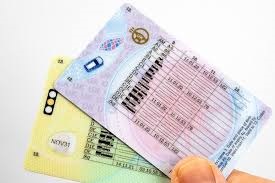
This is your official permission to start learning — the green photocard that everything else depends on.
Documents to gather first
Have these ready before you open the application form, since the online session can time out while you’re searching for paperwork:
A valid UK biometric passport by far the fastest route, since the online system scans and verifies it automatically via facial recognition
Without a passport: a UK birth or adoption certificate plus a secondary document (payslip, P45, P60, marriage certificate, or a National Insurance confirmation letter)
Eligible non-UK residents: a biometric residence permit (BRP)
Your address history for the last three years exact dates and postcodes
Your National Insurance number, if you have one (not mandatory)
Applying online vs by post
Method
Fee
Typical Delivery
Online
£34
~1 week
Postal (D1 form)
£43
~3–4 weeks
Apply only at gov.uk/apply-first-provisional-driving-licence. Type the address yourself rather than clicking through an advert — copycat websites charging £70–£100+ for the same service are common, and they add nothing beyond taking your money.
Once it arrives
You can’t drive alone yet — not even in a car park, technically, if the intention is practising for the road. You’ll need:
A supervisor aged 21+, who has held a full licence for the relevant vehicle type for at least 3 years
Red L plates (D plates in Wales) on the front and rear at all times
Valid learner driver insurance
Motorway driving is possible as a learner too but only with a DVSA-approved instructor in a dual-control car. Friends and family, however experienced, cannot supervise you on a motorway.
Milestone 3: Cracking the Theory Test
Nothing else moves forward until this is passed.
Booking
Fee: £23, booked at gov.uk/book-theory-test only
Sat at a Pearson VUE test centre roughly 160 across the UK
Pass certificate valid for 2 years if your practical test slips past that window, you’ll need to retake theory too
Format
50 multiple-choice questions — pass mark 43/50
14 hazard perception clips — pass mark 44/75
Both sections must be passed in the same sitting. Passing one and failing the other means resitting both.
Best ways to revise
Use the official DVSA revision app and question bank third-party materials sometimes lag behind rule changes
Practise hazard perception clips specifically, not just multiple-choice questions it’s a different skill (timing and instinct, not recall)
Aim to consistently score well above the pass mark in mock tests before booking the real thing, giving yourself a buffer against nerves
Managing regional booking queues
Test centre availability varies enormously by area. Some regions have same-week slots; busier cities can run weeks or even months out. A few practical workarounds:
Check multiple nearby centres, not just your closest one a 20-minute drive further out can save weeks of waiting
Book as soon as you’re genuinely ready, rather than waiting until the last moment, since slots fill fastest around exam season and school holidays
Set a calendar reminder to check for cancellations earlier slots do open up as other candidates reschedule
Handling test-day nerves
Arrive 15 minutes early, not right on the clock rushing in raises your heart rate before you’ve even sat down
Remember the test isn’t timed pressure in the way people imagine you can flag questions and return to them within the session
A short walk or a few slow breaths before you go in genuinely helps; physiologically, it lowers your resting heart rate enough to think more clearly under the multiple-choice section
A DVSA-approved instructor (ADI) is the standard route look for the green badge displayed in their car, which confirms current approval
There’s no fixed lesson count that guarantees readiness consistency matters more than raw hours
Many learners combine professional lessons with private practice (with a qualifying supervisor) to manage overall cost
Manual vs automatic
Passing in an automatic restricts your licence to automatics only (code 78)
Passing in a manual entitles you to drive both manual and automatic vehicles
If cost or nerves are a factor, automatic lessons are often quicker to build confidence in but weigh that against the manual restriction before committing
Booking your test
Fee: £62 weekdays (before 4:30pm), £75 evenings, weekends, and bank holidays
Book at gov.uk/book-driving-test, using your provisional licence number and theory pass certificate number
Cancel with 3+ working days’ notice for a full refund anything less forfeits the fee
What to bring on the day
Your provisional photocard licence the test cannot go ahead without it
The theory test pass certificate number (already linked to your booking, but good to have)
Glasses or contact lenses, if you need them for the number plate reading check
What actually happens
Around 40 minutes total, including roughly 20 minutes of independent driving
One “show me, tell me” safety question before you set off
One manoeuvre, chosen at random by the examiner
Common faults, and how to avoid repeating them
Observation at junctions is the single most common fault nationally — take the extra half-second to actually check, not just glance
Mirror checks before any change in direction or speed — examiners are watching for the habit, not just the outcome
Hesitation that creates a hazard for other drivers, often from over-caution rather than under-confidence
Managing nerves on test day
Treat it as one attempt among several people take on average the national first-time pass rate sits at roughly 50%, so a fail isn’t a signal you’re unready, it’s simply common
Drive the way you’ve been trained, not the way you imagine an “ideal” driver would examiners are marking against a standard, not personality
If you make a small mistake, keep going. Minor faults don’t fail a test on their own; only serious or dangerous faults do, and dwelling on an earlier slip is what causes a second one
What happens after you pass
No waiting required you can drive alone the moment the examiner confirms your pass
L plates come off, the supervisor requirement ends, motorway restrictions disappear
Your full pink licence typically arrives within 1–3 weeks by post — you’re legally entitled to drive in the meantime using your provisional, once you’ve passed
Life After Passing Your Driving Test
Driving independently
From the moment you pass, you can drive alone, carry passengers, and use motorways without restriction. It’s a genuine step change — many new drivers describe the first solo drive as more nerve-wracking than the test itself, simply because there’s no examiner to fall back on.
The New Drivers Act
New drivers face stricter penalty point rules for the first 2 years after passing. Accumulate 6 or more points in that window, and your full licence is automatically revoked — reverting you to provisional status, L plates and all, with both tests to retake before you can hold a full licence again.
Car insurance for new drivers
Expect premiums to run higher in your first year than they will later — insurers price in the lack of a claims history, alongside the New Drivers Act’s added risk profile. Prices typically ease at the 2- and 3-year marks as your record builds.
Keeping your licence up to date
Address changes: free, done online, and required by law — an out-of-date address can mean a fine of up to £1,000
Photocard renewal: every 10 years, £14 online or £17 by post
From age 70: renewal becomes mandatory every 3 years, and it’s free
Beginner’s Roadmap Checklist
Meet the eligibility requirements — age, residency, eyesight, medical declarations
Apply for your provisional licence — online, £34, ~1 week
Receive your provisional photocard — this is your green light to start learning
Book and pass your theory test — £23, both sections in one sitting
Choose a qualified driving instructor — look for the ADI green badge
Complete regular driving lessons, building toward test standard
Book your practical driving test — £62 weekday / £75 evening or weekend
Pass the practical exam — around 40 minutes, one manoeuvre, one safety question
Receive your full UK driving licence — arrives within 1–3 weeks, no waiting to drive
Drive safely and keep building experience — mind the New Drivers Act’s 6-point limit in year one and two
Frequently Asked Questions
What age can I apply for a provisional driving licence? From 15 years and 9 months old, though you can’t drive a car until 17 (16 in some PIP-related cases).
How much does a provisional licence cost? £34 online, £43 by post.
What documents do I need? Ideally a valid UK biometric passport. Without one, a birth or adoption certificate plus a supporting document, your last three years of addresses, and your National Insurance number if you have it.
How long does it take to receive my provisional licence? Around 1 week for online applications, 3–4 weeks for postal ones.
Can I start driving immediately after receiving my provisional licence? Only with a qualifying supervisor (21+, licence-holder for 3+ years), L plates displayed, and valid learner insurance in place.
How do I book my theory test? Through gov.uk/book-theory-test, for £23, at a Pearson VUE centre near you.
How many lessons do beginners usually need? There’s no fixed number — readiness depends on consistency and progress, not hours logged. Most learners combine professional lessons with private supervised practice.
What happens if I fail my practical test? You can rebook after a short mandatory waiting period. The national first-time pass rate is around 50%, so a fail is common and not a reflection of your overall ability.
Can I drive before my full photocard arrives? Yes — you’re legally entitled to drive alone from the moment you pass, even before the physical pink card arrives.
What are the rules for new drivers? Under the New Drivers Act, 6 or more penalty points within 2 years of passing automatically revokes your full licence, reverting you to provisional status.