WhatsApp:
+1 (413)758-9837
Address:
United Kingdom
WhatsApp:
+1 (413)758-9837
Address:
United Kingdom
Getting and keeping a UK driving licence involves more separate systems than most people realise an application process, two distinct tests, a category system that dictates exactly what you’re legally allowed to drive, and an ongoing administrative relationship with the DVLA that doesn’t end once you pass. This guide covers all of it, in the order you’ll actually encounter it, from your first provisional application through to renewing your licence decades later.
UK driving licence , Driving licence UK, DVLA driving licence, Provisional driving licence, Apply for a provisional driving licence,
Full UK driving licence, UK driving licence application, Driving licence renewal, Replace lost driving licence,
DVLA provisional licence, UK theory test, DVSA theory test, Theory test booking, Book theory test UK, Theory test practice,
Theory test revision, UK driving licence, Driving licence UK, DVLA driving licence, Provisional driving licence,
Every UK driving licence, regardless of category, starts here.
Who can apply
Applying online vs by post
Documents you’ll need:
Processing times
A provisional licence lasts 10 years, and you don’t need to have passed your test within that window though letting it lapse means reapplying and repaying the fee.
Apply for a provisional driving licence, Full UK driving licence, UK driving licence application, Driving licence renewal,
Replace lost driving licence, DVLA provisional licence, UK theory test, DVSA theory test, Theory test booking,
Book theory test UK, Theory test practice, Theory test revision
Once your provisional arrives, you’re legally able to start lessons and the theory test is the next formal milestone.
Booking
What’s actually tested
Your theory test certificate is valid for 2 years from the date you pass if you haven’t passed your practical test within that window, you’ll need to sit and pass the theory test again before you can rebook the practical.
Revision approach that actually works:
Common mistakes: candidates tend to underestimate stopping distance questions (the exact figures are easy to approximate but the test wants precision) and motorway-specific rules, since many learners have had limited motorway exposure by the time they sit the test. Provisional Licence
This is the longest phase for most learners, and the one where consistent, well-structured lessons matter more than raw hours logged. Practical Driving Test
Finding a driving instructor
Booking the practical test
Driving test waiting times and cancellation slots
Waiting times for a first available practical test slot have been a genuine bottleneck at many centres, often running to several months. A now-common workaround:
What to expect on the day:
Serious and minor faults
Common reasons candidates fail: poor observation at junctions and roundabouts, incorrect positioning on roundabouts specifically, and mistakes during reverse manoeuvres are consistently the most common causes nationally.
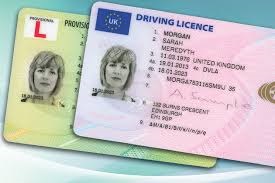
Receiving your full licence: once you pass, your full photocard licence typically arrives within 3 weeks. You’re legally allowed to drive immediately using your pass certificate as proof while you wait for the card itself.
Your licence category determines exactly what you’re legally allowed to drive and driving outside your entitlement invalidates your insurance, regardless of how capable a driver you actually are.
| Category | Covers | Typical Minimum Age |
|---|---|---|
| AM | Mopeds up to 50cc, max 28mph | 16 |
| A1 / A2 / A | Light, medium, and full-power motorcycles | 17 / 19 / 24 (or 21 with 2 years on A2) |
| B | Cars and small vans up to 3,500kg, up to 8 passenger seats, trailer up to 750kg | 17 |
| B Auto | Category B, automatic transmission only | 17 |
| BE | Category B vehicle towing a heavier trailer | 17 |
| C1 | Medium goods vehicles, 3,500kg–7,500kg | 18 |
| C | Heavy goods vehicles over 3,500kg | 18 (with Driver CPC), 21 otherwise |
| D1 | Minibuses, up to 16 passenger seats | 21 |
| D | Buses and coaches | 21 (with Driver CPC), 24 otherwise |
A note on grandfathered entitlement: if you passed your car test before 1 January 1997, you likely automatically hold BE, C1, C1E, D1, and D1E entitlement alongside your Category B a genuinely common source of confusion for older drivers who don’t realise the scope of what their licence actually covers. Anyone who passed after that date holds Category B only, and needs to pass additional category-specific tests to add anything else.
Weight limits explained simply
Checking your actual current entitlement: the most reliable method is the “View your driving licence” service on GOV.UK your physical photocard can go out of date if you’ve added a category recently and haven’t received the updated card yet.
A full licence isn’t a one-time achievement it comes with ongoing administrative obligations.
Standard renewal
Renewing at 70
Replacing a lost, stolen, or damaged licence
Changing your address or name
Exchanging a foreign driving licence
Checklist for anyone relocating to the UK:
How do I get a UK driving licence? Apply for a provisional licence, pass the theory test, complete practical lessons, then pass the practical test — your full licence typically arrives within 3 weeks of passing.
How much does it cost? Budget roughly £34 for the provisional, £23 for theory, and £62–£75 for the practical, before lesson costs — a realistic total for lessons and tests combined is commonly £1,500–£2,000, though this varies significantly by location and how many attempts are needed.
How long does the whole process take? Most learners take 6–12 months from provisional application to passing, depending on lesson frequency and local test availability.
What licence category do I need? Category B covers a standard car. Larger vehicles, minibuses, and HGVs each require a separate category, generally with a higher minimum age and often the Driver CPC qualification for commercial use.
Can I exchange my foreign licence? Yes, if your country is on the DVLA’s designated list this allows a direct swap without retesting. If it isn’t, you’ll need to apply for a provisional licence and pass both UK tests.
How long is a theory test certificate valid? 2 years. If you haven’t passed your practical test within that window, you’ll need to pass the theory test again.
How do I renew my licence? Online through GOV.UK for £14, with renewal required every 10 years or every 3 years, free of charge, once you turn 70.
What happens if I lose my licence? Apply for a replacement online for £20; it typically arrives within a week, and you can update your photo at the same time if your licence was already due to expire soon.
How do penalty points work? Points are added to your licence for driving offences and generally count towards a ban if you reach 12 within 3 years new drivers face a stricter threshold of just 6 points within their first 2 years, which triggers automatic licence revocation rather than a standard ban.
Can I drive before my photocard arrives? Yes once you’ve passed your practical test, you’re legally entitled to drive using your pass certificate while you wait for the physical card to arrive.
The UK driving licence system looks intimidating mostly because it’s five separate processes stitched together application, theory, practical, category entitlement, and ongoing administration each with its own fees, timelines, and rules. Treat each phase as its own discrete task rather than one continuous blur, keep your documents and reference numbers organised as you go, and the whole process becomes considerably more manageable than it first appears.
Prop money Europe, Movie money Europe, Replica banknotes Europe, Film prop cash Europe, Photography prop money Europe, Stage money Europe, Educational banknotes Europe, Display currency Europe, Fake money for film Europe, Film production props Europe, Prop cash bundles Europe, TV prop money Europe, Theatre prop money Europe, Movie prop banknotes Europe, Legal replica money Europe,